
Sade Sati is one of the few Sanskrit terms that has crossed into everyday conversation among Indian families. The phrase means seven and a half, and it refers to the roughly seven-and-a-half-year stretch during which Saturn transits the sign before your natal Moon, the Moon sign itself, and the sign after. Because Saturn spends about two and a half years in each sign, the entire cycle takes that long.
People fear it. Parents worry when children enter it, and elders speak of it in hushed tones. But the classical texts do not describe Sade Sati as a curse or a period of ruin. They describe it as a phase of discipline, responsibility and the removal of what is unstable. The intensity depends on Saturn's condition in your birth chart, the dasha you are running, and which of the three phases you are in.
 View full-size illustration ↗
The three phases and what they address
Sade Sati is divided into three parts, each lasting about two and a half years. The rising phase occurs when Saturn transits the twelfth house from your Moon. Tradition associates this with expenses, foreign matters, withdrawal and endings. You may feel the ground shift beneath long-standing arrangements.
The peak phase is Saturn's transit through your Moon sign itself. This is considered the most intense segment. The Moon governs the mind, emotions and sense of security, and Saturn's presence here can feel like a weight. Responsibilities multiply, confidence wavers, and you are asked to rebuild your inner foundation.
The setting phase comes when Saturn moves into the second house from your Moon. The second house relates to family, speech, savings and nourishment. This period often brings financial caution, changes in family dynamics, or a need to speak more carefully. The pressure begins to lift, but the lessons remain.
What the shastras actually say
Brihat Parashara Hora Shastra and later commentaries discuss Saturn's transit effects in detail, but they do not single out Sade Sati as uniformly destructive. Saturn is a natural malefic, yes, but he is also the karaka for longevity, discipline, service and detachment. His transits test what is poorly built and reward what is sound.
The tradition emphasizes that Saturn's results depend on his natal placement, his dignity in the transit sign, and the dasha period running concurrently. A well-placed Saturn in the birth chart, or a favorable dasha, can make Sade Sati a time of consolidation and achievement rather than hardship. Regional texts vary in their specifics, and some astrologers apply additional conditions like the ashtakavarga score of the transiting sign.
How it interacts with your dasha
Sade Sati is a transit, meaning it affects everyone born under a given Moon sign during the same years. But its impact on your life depends heavily on the dasha you are running. Our page on dasha explains how these planetary periods unfold, and understanding your current dasha is essential to interpreting any transit.
If you are running a Saturn dasha or antardasha during Sade Sati, the themes intensify. If you are in a Venus or Jupiter period, the difficulties may be cushioned. The dasha is the river; the transit is the weather. Both matter.
Common experiences and what they mean
People report certain patterns during Sade Sati. Workload increases, often without immediate recognition. Relationships require more effort. Health issues that were ignored demand attention. Plans take longer than expected, and shortcuts fail.
These are not punishments. Saturn governs time, structure and consequence. He makes visible what was always there but deferred. A weak foundation cracks; a strong one holds. The period asks you to live within your means, honor your commitments, and let go of what you were holding by force.
| Phase | House from Moon | Common themes |
|---|---|---|
| Rising | 12th | Expenses, solitude, endings, foreign matters |
| Peak | 1st | Identity, health, confidence, responsibility |
| Setting | 2nd | Family, speech, finances, nourishment |
 View full-size illustration ↗
Remedies and what they can do
Tradition prescribes remedies for Sade Sati, and they are worth understanding clearly. Remedies do not erase the transit or guarantee a specific outcome. They are practices meant to align your behavior with Saturn's significations: discipline, service, humility and patience.
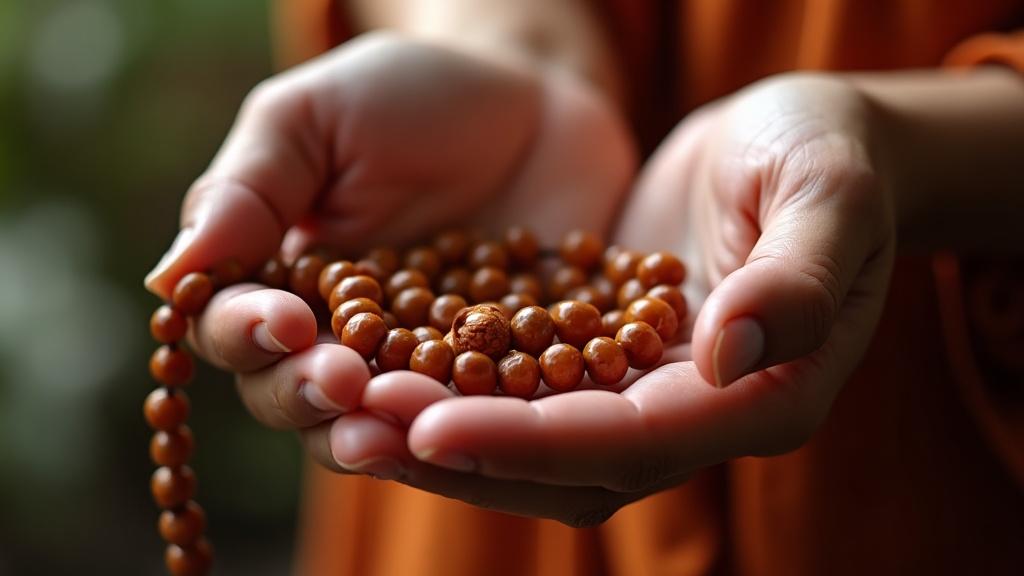
Common remedies include reciting the Shani mantra, particularly on Saturdays; donating black sesame, iron or mustard oil to those in need; fasting or eating simply on Saturdays; and offering water to a peepal tree. Wearing a blue sapphire is sometimes recommended, but only after careful chart analysis, because a poorly placed Saturn can be worsened by strengthening him.
These practices work by cultivating the qualities Saturn rewards. They are not magical fixes. They are reminders.
Living through it in North America
For families in Toronto, New Jersey or the Bay Area, Sade Sati can feel especially isolating. You are far from the temples, the astrologers you grew up consulting, and the extended family who would have guided you through it. Apartment living makes it hard to keep a peepal tree or light a lamp at dawn.
What remains possible is the core: discipline in your work, honesty in your relationships, and patience with outcomes. You can recite a mantra on your phone during your commute. You can set aside a small amount each week for donation. The form adapts; the principle does not.
Our Sade Sati page offers a calculator that shows which phase you are in and when the period began. It is a starting point, not a final word, because your birth chart and dasha matter more than the transit alone.
What comes after
Sade Sati ends when Saturn moves into the third house from your Moon. The relief is real, but the changes remain. What you built during those years, the habits you formed, the illusions you released, these shape the next two decades until Saturn returns.
The period is not about survival. It is about maturity. Saturn does not take away what is yours; he takes away what you were borrowing on credit. What remains is what you actually earned.