
The main door is the first thing guests see and the last thing you pass through each day. In Vastu Shastra it holds significance beyond aesthetics or security. The shastra calls it the mukha, the mouth of the dwelling, and teaches that the direction it faces, its size, its materials and even the threshold height all influence how energy moves through the home.
This is an architectural grammar developed over centuries in which orientation, proportion and the path of the sun are woven together. For families in North America living in homes not originally designed with these principles, understanding what Vastu teaches about the main door can clarify which adjustments matter and which do not.
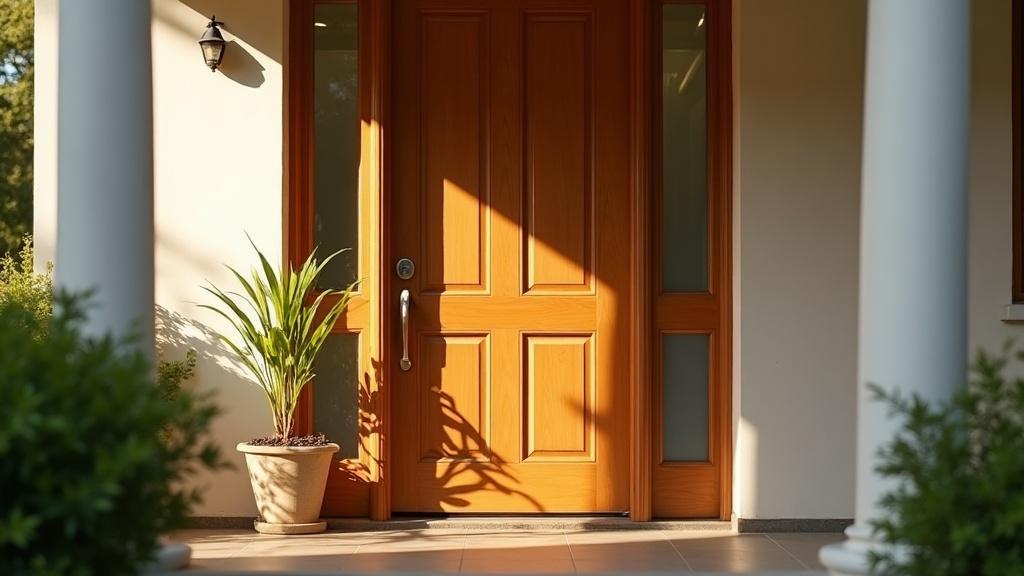 View full-size illustration ↗
Why the main door receives so much attention
Vastu Shastra divides a building into zones governed by different deities and planetary forces. The main door is where outside energy—prana carried by wind, light and the movement of people—enters and begins to circulate. If the entrance is well-placed, that energy flows smoothly into the home's core. If poorly placed, it can stagnate, rush too quickly, or bypass important areas.
The door also sets the tone. A north-facing entrance receives soft, steady light throughout the day. An east-facing door catches the rising sun, considered auspicious because it aligns with new beginnings. A south-facing entrance receives harsher afternoon heat and is traditionally associated with Yama, the deity of discipline and time, making it less favoured though not forbidden.
The eight directions and their qualities
Each cardinal and intercardinal direction has a ruling planet and a set of associations.
| Direction | Ruling Planet | Traditional Quality | Suitability for Main Door |
|---|---|---|---|
| North | Mercury | Wealth, opportunity | Excellent |
| Northeast | Jupiter | Wisdom, spirituality | Excellent |
| East | Sun | Health, vitality | Excellent |
| Southeast | Venus | Relationships, comfort | Moderate |
| South | Mars | Discipline, authority | Least preferred |
| Southwest | Rahu | Stability, grounding | Not recommended |
| West | Saturn | Gains, completion | Moderate |
| Northwest | Moon | Support, movement | Moderate |
North, northeast and east are universally preferred. West and northwest are acceptable, especially for commercial premises. South and southwest are traditionally avoided for the main entrance, though remedies exist.
What to do when direction is fixed
Most people in Toronto or the Bay Area do not build from scratch. Vastu does not demand you move or rebuild. Instead, it offers adjustments.
If the door faces south, ensure it is well-lit, kept in excellent repair, and opens fully without obstruction. If the door is in the southwest, consider using a side or garage entry as the daily entrance if feasible. If the northeast is blocked by a wall or heavy furniture inside, clearing that space can restore balance even if the door itself is elsewhere.
For a detailed assessment of your specific floor plan, the Vastu Studio service can provide guidance tailored to your building's orientation.
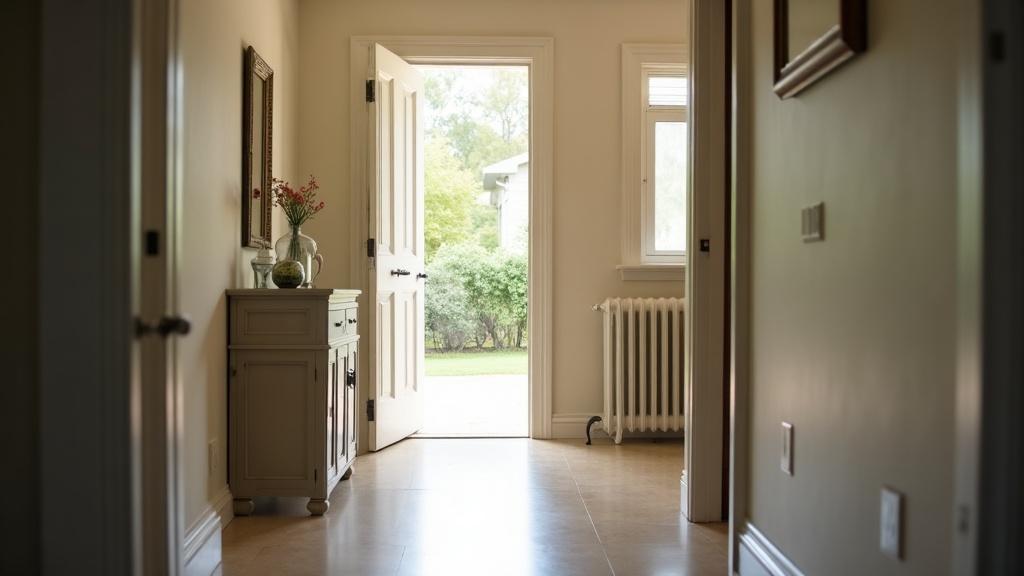 View full-size illustration ↗
Size, material and threshold details
The main door should be the largest in the home, taller and wider than interior doors, to allow energy to enter generously. Classical texts recommend wood over metal, particularly teak or shisham, because wood is considered warm and living.
The threshold should be slightly raised so that energy steps up into the home rather than spilling out. The door should open inward and to the right when you are standing outside, aligning with clockwise movement.
Avoid placing a bathroom, staircase or kitchen directly behind the main door. The entry should open into a welcoming space, not a narrow corridor.
Common obstacles and practical fixes
In apartment buildings, the main door often opens onto a shared hallway. Vastu considers the door to your unit the main door. Focus on what you can control: keep the area outside your door clean, ensure good lighting, and avoid clutter in the entryway inside.
If a column, tree or pole stands directly in line with the main door, it is called a vedha, an obstruction. Shifting the door a few feet during renovation is ideal. If that is not possible, placing a mirror on the inside wall adjacent to the door is a traditional remedy.
What Vastu does not promise
No classical text guarantees that a north-facing door will bring wealth or that a south-facing door will bring hardship. What the shastra offers is a framework in which architecture and orientation work with natural forces. A well-placed door makes a home feel welcoming, light-filled and orderly.
Vastu is not a substitute for structural engineering, local building codes, or common sense about security and weatherproofing. It is a layer of intention.
Living with the door you have
If your main door faces a less favoured direction, you are not living under a disadvantage that no effort can overcome. A south-facing door that is beautiful, well-maintained, brightly lit and opens into a spacious entry will serve a family far better than a neglected north-facing door that sticks and opens into chaos.
The door is a daily threshold. What matters is that crossing it feels like coming home.