
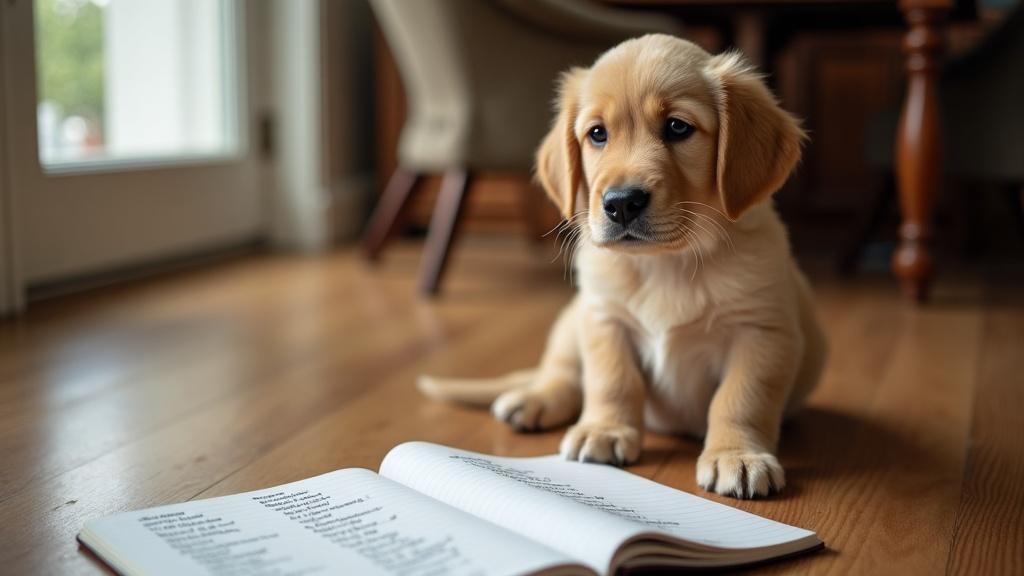
The nakshatra naming tradition—choosing a child's name from sounds prescribed by the lunar mansion at birth—is one of the gentler practices in Jyotish. It does not predict or prescribe; it simply offers a starting sound that harmonizes with the child's moment of arrival. The same idea can be applied when a dog, cat, bird or other companion joins your household, not because animals need astrological protection, but because the act of naming is itself a welcome, and a small ceremony costs nothing.
 View full-size illustration ↗
What the tradition actually says
In classical texts like the Brihat Samhita, the nakshatra at a child's birth determines a set of syllables considered auspicious for the first sound of the name. Each of the twenty-seven nakshatras governs three or four padas, and each pada corresponds to a sound. This is not magic; it is a mnemonic and rhythmic system that ties a person to the lunar calendar their family follows. The same table of sounds exists whether you are naming a daughter in Delhi or a rescue dog in Detroit.
Using the day you bring the pet home
Most pets do not come with a known birth time. Shelters and breeders rarely record the hour, and strays arrive with no history at all. The practical solution is to treat the day you bring the animal home as the relevant moment—the beginning of their life in your family. You can look up the nakshatra for that date using a panchang or the free kundli tool on this site, which will show you the Moon's position and the corresponding sounds. If you already have a name in mind, you can check whether it fits; if not, the list of sounds may suggest something new.
The nakshatra sound table
Each nakshatra governs a set of sounds. Here is the traditional list, using roman transliteration:
| Nakshatra | Sounds |
|---|---|
| Ashwini | Chu, Che, Cho, La |
| Bharani | Li, Lu, Le, Lo |
| Krittika | A, I, U, E |
| Rohini | O, Va, Vi, Vu |
| Mrigashira | Ve, Vo, Ka, Ki |
| Ardra | Ku, Gha, Ng, Chha |
| Punarvasu | Ke, Ko, Ha, Hi |
| Pushya | Hu, He, Ho, Da |
| Ashlesha | Di, Du, De, Do |
| Magha | Ma, Mi, Mu, Me |
| Purva Phalguni | Mo, Ta, Ti, Tu |
| Uttara Phalguni | Te, To, Pa, Pi |
| Hasta | Pu, Sha, Na, Tha |
| Chitra | Pe, Po, Ra, Re |
| Swati | Ru, Re, Ro, Ta |
| Vishakha | Ti, Tu, Te, To |
| Anuradha | Na, Ni, Nu, Ne |
| Jyeshtha | No, Ya, Yi, Yu |
| Mula | Ye, Yo, Bha, Bhi |
| Purva Ashadha | Bhu, Dha, Pha, Dha |
| Uttara Ashadha | Bhe, Bho, Ja, Ji |
| Shravana | Ju, Je, Jo, Gha |
| Dhanishtha | Ga, Gi, Gu, Ge |
| Shatabhisha | Go, Sa, Si, Su |
| Purva Bhadrapada | Se, So, Da, Di |
| Uttara Bhadrapada | Du, Tha, Jha, Tra |
| Revati | De, Do, Cha, Chi |
If the nakshatra on your pet's homecoming day was Pushya, for example, you might consider names like Hugo, Honey, Dash or Dottie. If it was Magha, Max, Milo, Misty or Moose all fit.
 View full-size illustration ↗
When the name is already chosen
Sometimes the name arrives with the animal—a shelter name that stuck, a breeder's registered name, or simply the first sound that felt right when you met. There is no need to change it. You can check whether it happens to match the nakshatra of the day you brought them home, and if it does, note the coincidence. If it does not, the name is still the name. This is a tradition of welcome, not obligation.
What this is not
This practice does not promise good health, long life or obedience. It does not require a gemstone, a puja or a donation. It is not a remedy for anything. A name chosen by nakshatra will not protect a dog from illness or a cat from injury any more than a name chosen from a favorite book. What it offers is a small ritual that connects your household practice to a calendar you may already consult for other events, and a moment of intention as a new life enters your home.
A note for families far from India
In Toronto or New Jersey, you are unlikely to find a priest who will perform a namkaran samskara for a pet, and there is no need to invent one. The nakshatra table is enough. You can look it up on your phone, choose a sound, try a few names aloud, and pick the one that suits. If your children are involved, this can be a way to teach them the nakshatra system in a context that feels immediate and joyful, rather than abstract. The free kundli page on this site will show you the nakshatra for any date, and the products page offers longer consultations if you want to explore your family's chart in more depth, though neither is required for this small act.
A closing thought
Naming is always a threshold. Whether you follow the nakshatra sounds or not, the act of choosing a name and saying it aloud for the first time marks the beginning of a relationship. If the tradition helps you pause, consider and choose with care, it has done its work.