
Rahu kaal appears on every panchang and in dozens of calendar apps, usually printed in red or marked with a warning symbol. For families trying to schedule a house closing, a first day at work or a long drive, it raises an immediate question: does this actually matter, and if so, how seriously?
The concept is simpler than it looks. Rahu kaal is not an eclipse, a planetary transit or a calculation involving your birth chart. It is one-eighth of the period between sunrise and sunset on a given day, assigned to a different weekday in a repeating pattern. The tradition holds that beginning something new during this window invites obstacles, delays or wasted effort, so it is better to wait.
 View full-size illustration ↗
The astronomy and the assignment
Vedic timekeeping divides each day into eight equal parts called yama, each roughly ninety minutes long when days are twelve hours. One yama is ruled by Rahu, the north lunar node, which in myth swallowed the sun and brought darkness. The assignment to weekdays follows a fixed order, not derived from planetary positions but preserved by custom.
| Weekday | Rahu kaal falls in |
|---|---|
| Monday | Second yama (07:30–09:00 for a 6 AM sunrise) |
| Tuesday | Eighth yama (last period before sunset) |
| Wednesday | Fifth yama (midday) |
| Thursday | Fourth yama (late morning) |
| Friday | Sixth yama (early afternoon) |
| Saturday | Third yama (mid-morning) |
| Sunday | Seventh yama (late afternoon) |
Because the length of daylight changes through the year and varies by latitude, rahu kaal on a January morning in Toronto will be shorter and earlier than the same weekday in July. A panchang calculates this daily for your location; you cannot use a table printed for Mumbai if you live in Vancouver.
What the tradition actually restricts
Rahu kaal applies to beginnings: signing a lease, opening a business, starting a journey, launching a website, scheduling surgery, or holding a wedding ceremony. The concern is not that harm will come during the period itself, but that what you start will meet resistance or fail to take root.
Routine work continues without issue. If you are already at the office, already on the road, or in the middle of a project, there is no instruction to stop. A meeting that was scheduled earlier may proceed. The restriction is about initiation, not continuation.
Some families extend the caution to making large purchases or important phone calls. Others observe it only for life events. Regional practice varies, and no single authority legislates the boundary.
How to find it for your city
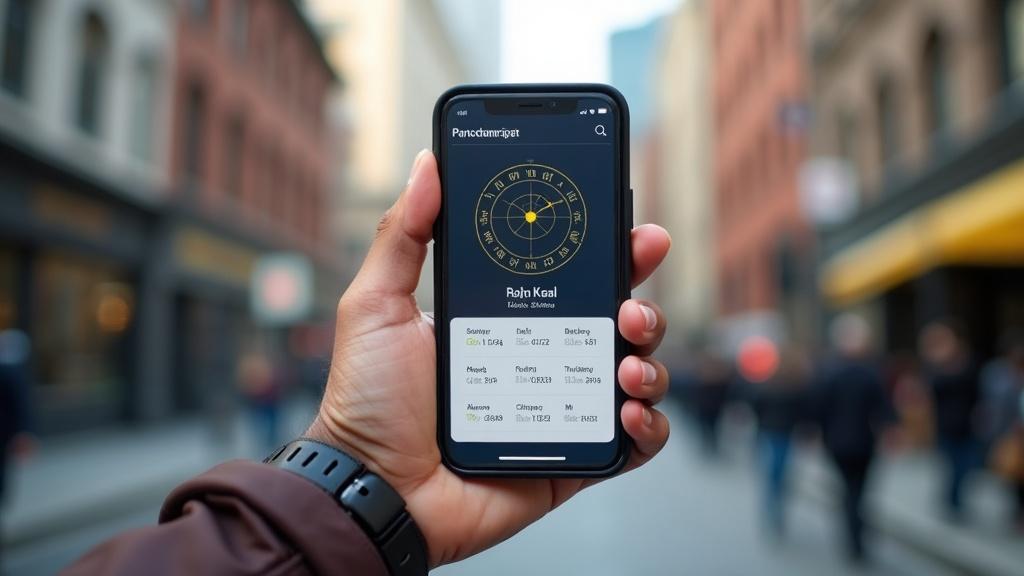
Most panchang services, including the one on this site, calculate rahu kaal automatically when you enter your location. The calculation requires your latitude, longitude and time zone, because it depends on the local moment of sunrise and sunset, not clock time in a distant city.
If you are using a printed panchang published in India, the times will be wrong for North America. Sunrise in Delhi does not predict sunrise in Chicago. A panchang app that asks for your postal code or uses your device location will be accurate; a static table will not.
 View full-size illustration ↗
For families keeping a regular practice, checking the panchang page each morning or the evening before becomes part of the rhythm, like checking the weather. The muhurtham page on this site offers a fuller view of auspicious and inauspicious windows when planning something that cannot be moved easily.
When it matters and when it does not
Tradition does not require you to avoid rahu kaal for every errand. Buying groceries, going to the gym, or picking up a prescription are not beginnings in the sense the shastra intends. The question is whether you are setting something in motion that you hope will succeed and endure.
For events where you have chosen an auspicious muhurta, rahu kaal is already factored out; a proper election avoids it along with several other conditions. For everyday decisions, many people simply note it and proceed if no alternative exists, understanding that not every tradition can be observed perfectly when living far from extended family and a culture that moves by the same calendar.
No classical text suggests that violating rahu kaal brings disaster. The word used is ashubha, inauspicious, meaning the conditions are not supportive. If your job interview, your flight or your closing is scheduled during rahu kaal and cannot be changed, go. The outcome depends on many factors, and rigidity about timing can create more stress than the timing itself.
Rahu kaal and other inauspicious periods
Rahu kaal is one of several daily periods marked on a panchang. Yamaganda and Gulika are similar windows, also lasting one-eighth of the day, assigned by a different pattern. Dur-muhurtham is a shorter, more serious restriction, often thirty to forty-five minutes, used primarily in South Indian practice.
These periods overlap occasionally but serve different functions. Rahu kaal is the most widely observed outside temple and ritual contexts. If you are new to reading a panchang, start with rahu kaal and the tithi; the rest can be learned gradually as your practice deepens.
Working with it in daily life
Respecting rahu kaal does not mean rearranging your entire day. It means noticing it when you have flexibility. If you plan to call your landlord about renewing the lease, check the panchang and wait an hour if rahu kaal is about to begin. If your daughter's school orientation is at 10 AM on Saturday and that falls in rahu kaal, attend it anyway; you did not choose the time.
For families in apartments where a home puja is not possible, or where work schedules make daily panchang consultation difficult, even occasional awareness is worth something. The point is not perfection but a small gesture of aligning your actions with a larger order, a way of saying that time has texture and that beginnings matter.