
Samudrika Shastra is a traditional Indian physiognomic practice that interprets the face, body and hands through a belief-based cultural framework. The word samudrika means relating to the ocean or the whole, and shastra means systematic knowledge. Together they describe a historical framework for interpreting physical form; it is not a scientific method for determining personality or health. It appears in Sanskrit texts alongside Jyotisha and Ayurveda, and shares their view that the body reflects inner qualities shaped by past karma and present planetary influence.
The practice is old. References appear in the Garuda Purana, the Narada Purana and the Brihad Samhita of Varahamihira, written around the sixth century. Regional traditions developed their own manuals. Some focused on selecting horses or elephants for royal stables. Others, like the Samudrika Lakshana texts, concentrated on human features. These texts record historical beliefs used by advisers and matchmakers. Their claims are not scientific assessments and must never be used to diagnose health, character or compatibility.
 View full-size illustration ↗
What the Shastra Observes
Samudrika Shastra divides the body into regions and examines proportion, colour, texture and marks. The face receives the most attention. In the tradition, forehead, eye, nose, lip, ear and chin features are assigned symbolic associations with intellect, emotion, will and temperament. These are historical beliefs, not reliable conclusions about a person.
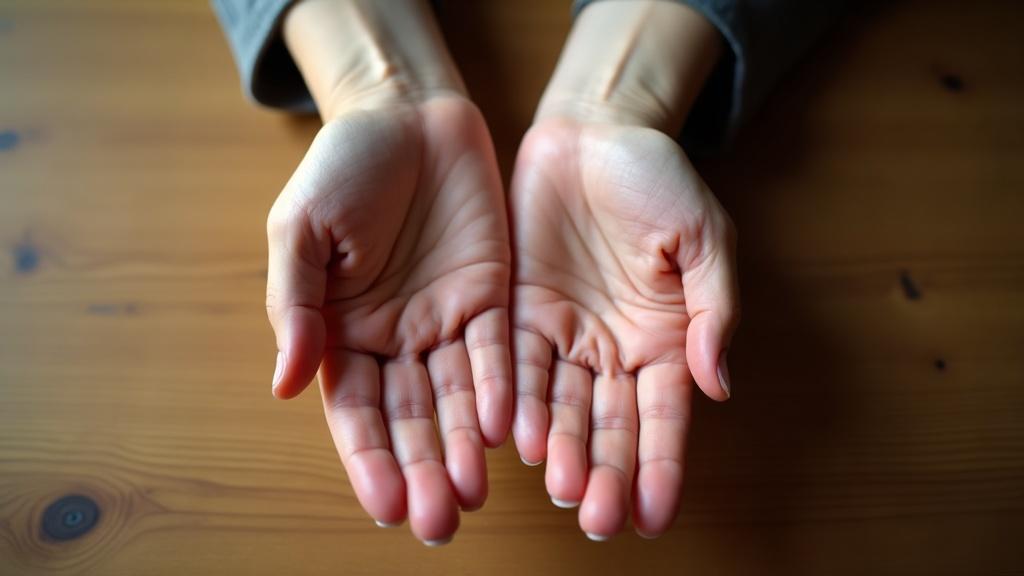
Beyond the face, the text notes hand shape, finger length, nail beds and the quality of skin. Moles, birthmarks and lines carry meaning depending on their location. A mark on the right side of the body is generally read differently than one on the left. Some traditions associate specific marks with planetary influence, linking a mole near the eye to the Moon or one on the thumb to Venus.
The system does not claim to predict events. It describes tendencies. A person with a prominent forehead may incline toward study. Someone with soft hands may prefer intellectual work to physical labour. These are observations about temperament, not fate.
How It Relates to Astrology
Samudrika Shastra and Jyotisha share a common foundation. Both assume that a person's form, whether the birth chart or the physical body, reflects their karmic inheritance. The Brihat Parashara Hora Shastra mentions that planetary positions at birth influence not only destiny but also appearance. A strong Sun may give a broad forehead and steady gaze. A weak Moon may show in restless eyes or a pale complexion.
Some astrologers use face reading as a cross-check. If the chart suggests a person is prone to anger, a red complexion or a sharp jaw may confirm it. If the chart shows creative talent, long fingers or a high forehead may support the reading. The two systems do not replace each other. They offer different windows into the same person.
For families using the free Kundli tool on this site, samudrika can add context to what the chart reveals. It does not change the chart, but it may clarify how a planetary pattern expresses itself in daily life.
The Limits of the Practice
Samudrika Shastra is descriptive, not deterministic. A feature may suggest a tendency, but it does not lock a person into a single outcome. Someone with a narrow forehead is not doomed to poor judgment. Someone with thin lips is not incapable of generosity. The shastra itself warns against reading a single feature in isolation. The whole face, the whole body, must be considered.
Modern readers must also separate tradition from prejudice. Some old texts associate fair skin with good fortune or dark skin with hardship. These are cultural biases, not universal principles. Other features, like scars or asymmetries from injury, tell a story about life events, not karma. A responsible reader distinguishes between what the shastra teaches and what later commentary has added.
 View full-size illustration ↗
Common Features and Their Meanings
The table below summarizes a few widely recognized associations. Regional traditions vary, and no single feature should be read alone.
| Feature | Traditional Reading |
|---|---|
| Broad forehead | Intellectual capacity, foresight |
| Large, steady eyes | Emotional balance, compassion |
| Straight nose | Self-respect, independence |
| Full lips | Generosity, warmth |
| High-set ears | Longevity, good health |
| Long fingers | Artistic or intellectual work |
| Square palms | Practical skills, physical strength |
Learning and Applying the System
Samudrika Shastra is not something learned from a single book. It requires study under someone who knows the tradition, ideally alongside astrology and Ayurveda. The classical texts are dense and assume familiarity with Sanskrit terminology. Modern translations exist, but they vary in quality.
For families in North America, the practice offers a way to stay connected to a broader Vedic worldview. It can be part of how you assess compatibility before marriage, understand a child's temperament, or make sense of your own strengths. Golden Kundli does not currently sell face-reading consultations. This article is provided only to explain the tradition and its limits.
Do not use it to judge others harshly or to excuse your own behaviour. The shastra is a mirror, not a verdict.
A Practice for the Observant
Samudrika Shastra rewards patience. It asks you to look closely, to notice proportion and texture, to see the body as a language. It does not promise certainty. It offers one more way to understand yourself and the people around you, preserved through centuries of tradition. It does not supplement a medical history, psychological assessment or other evidence-based evaluation. Used carelessly, it becomes another way to flatten a person into a type. The choice, as always, is yours.