
The kitchen is the only room in a home where fire burns daily. Vastu shastra assigns it to the south-east corner because that quadrant belongs to Agni, the god of fire. The reasoning is simple: like supports like, and fire placed in its own quarter burns steadily and nourishes the household. But most condominiums in Toronto or New Jersey were not designed with the Agni corner in mind. This article explains what the classical texts prescribe, why they prescribe it, and what adjustments make sense when your floor plan will not cooperate.
 View full-size illustration ↗
Why the South-East Corner
The Manasara and related texts divide a building into a grid, each square governed by a deity or energy. The south-east quadrant, called Agneya, is Agni's domain. Placing the kitchen here aligns the household fire with the cosmic fire, which tradition holds promotes health, steady income, and harmony. The cook should face east while preparing food, so that the morning sun lights the work and the body's energy flows with the rising light.
The north-west, governed by Vayu (wind), is a secondary location if the south-east is blocked. Wind feeds fire, so the pairing is acceptable. The texts warn against the south-west, which belongs to the ancestors and stillness, and the north-east, which is reserved for water, worship, and light.
What the Texts Actually Say
Vastu shastra is not a single book but a family of texts written over many centuries. The Manasara Shilpa Shastra and the Mayamata both place the kitchen in the south-east and specify that the stove should sit in the south-east portion of the kitchen itself, a nested logic that applies the directional principle at two scales.
The texts do not say that a kitchen in the wrong corner brings disaster. They say that proper placement supports well-being, and improper placement requires more effort to maintain balance. Vastu is a set of guidelines for aligning human activity with natural forces, not a system of curses and cures.
Adjustments for an Apartment Kitchen
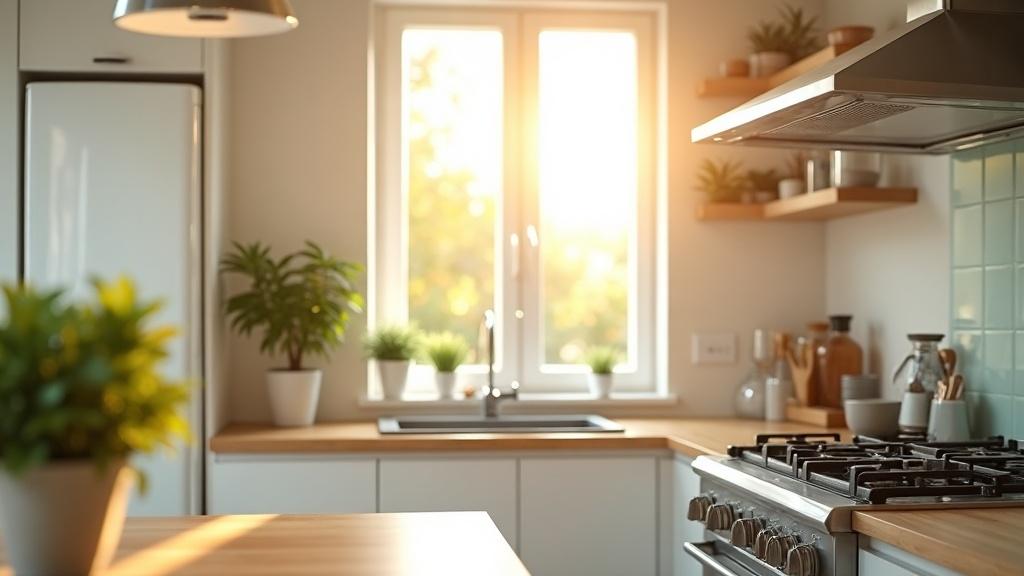
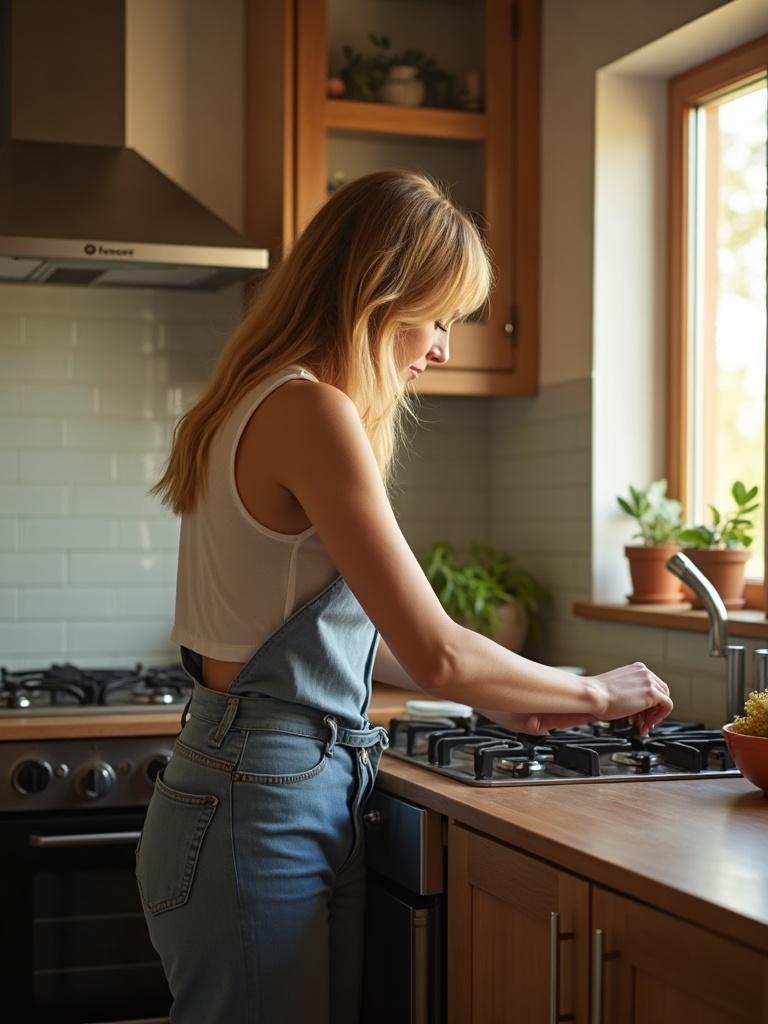
When the kitchen is fixed by the building's design, the tradition offers several adjustments. Place the stove in the south-east corner of the existing kitchen, regardless of where the kitchen sits in the floor plan. If that is impossible, place it on the east or south wall, but not in the north-east corner. Ensure the cook faces east while working at the stove. Keep the kitchen bright and well-ventilated; Agni thrives in open air and daylight.
 View full-size illustration ↗
Avoid placing the kitchen directly above or below a bedroom or bathroom, because the energies conflict. In a multi-story condo this is often out of your control, but if you are choosing between units, it is worth considering. Do not place the sink or refrigerator immediately next to the stove. A few feet of counter space between them is sufficient.
The Stove, the Sink, and the Refrigerator
Within the kitchen, the stove represents Agni, the sink represents Jala (water), and the refrigerator also carries water's qualities. The classical arrangement places the stove in the south-east, the sink in the north-east, and heavy storage in the south-west.
When this is impossible, keep the sink and stove separated by at least two feet. The refrigerator can go in the south-west, west, or north-west; avoid the north-east if you can, because that corner should remain light and open.
| Element | Ideal Direction | Acceptable Alternative | Avoid |
|---|---|---|---|
| Stove | South-East | East, South | North-East, South-West |
| Sink | North-East | North | South-East |
| Refrigerator | South-West, West | North-West | North-East |
| Cook's facing | East | North | South, West |
Colours, Materials, and Ventilation
The kitchen should feel warm, clean, and airy. Walls in warm tones such as cream, light yellow, or soft orange support the fire element; avoid dark blues and blacks. Stainless steel, copper, and brass are traditional materials that carry fire's brightness. Increase lighting and open the window during cooking. A working exhaust fan is not optional; stale smoke weakens Agni.
Keep the stove clean and in working order. A broken burner or sputtering pilot light is a sign of neglected fire, and the texts say this reflects in the household's vitality and finances.
When the Layout Cannot Change
If your kitchen is in the north, north-east, or south-west and you cannot move, strengthen Agni within the space you have. Place the stove in the best available corner, face east while cooking, keep the room well-lit, and maintain the stove carefully. You might light a small oil lamp in the south-east corner during meal preparation as a symbolic acknowledgment of Agni's direction. This is not a remedy that reverses a condition; it is a practice that aligns your intention with the traditional principle.
Cooking and Household Harmony
The kitchen is where raw things become nourishment. Vastu treats it as a place of transformation, and the quality of that transformation depends on the cook's state of mind as much as the room's direction. The texts say that food prepared in anger or haste carries that energy to those who eat it. A kitchen that is cluttered, dark, or poorly ventilated makes cooking a chore. A kitchen that is clean, bright, and thoughtfully arranged makes it easier to cook with presence.
Vastu for kitchen is not about perfection. It is about understanding the logic behind the guidelines and applying what you can.